
By Dr Emma Hepburn, clinical psychologist, author and illustrator from Aberdeen
Dr Emma Hepburn, an Aberdeen-based clinical psychologist, author, illustrator and mum to two school-aged children, has spent years helping individuals understand stress, overwhelm and burnout. Her new book, launching in February, explores how burnout can show up not just in traditional workplaces, but in everyday life, including parenting.
Parenting is full of love, meaning and moments that matter - but it also asks a lot of us. For many parents, especially mothers, the mental, emotional and physical load can feel constant, and at times exhausting or overwhelming. When this pressure builds day after day, the experience can go beyond ordinary tiredness.
Burnout has long been framed as a workplace issue. But when we broaden the definition to include unpaid caring work, it becomes clear why so many parents relate to the same patterns: chronic stress, depleted energy and a sense of running on empty.
This is exactly what parental burnout research aims to uncover and explain - what happens when the demands of parenting consistently outweigh our emotional and physical capacity.
The signs of parental burnout
It can be hard to distinguish parental burnout from parenting itself. However it can typically be identified by three key themes: exhaustion, detachment and less efficiency. Here are some common behaviours and feelings to look out for, that may indicate you’re experiencing parental burnout…
- Exhaustion
- A deep, pervasive exhaustion that goes beyond typical tiredness
- Exhaustion that doesn’t ease with rest or sleep
- Feeling completely drained before the day has even begun
- Detachment
- Feeling disconnected from your role as a parent
- Feeling increasingly negative about parenting
- Feelings of guilt, shame or negativity towards yourself or your children
- An increased mental distance from your children
- Reduced efficiency
- Everyday tasks feeling significantly harder than they used to
- Increased difficulty with problem-solving and decision-making
- Impaired concentration and dulled cognitive functioning
- A “zombie-like” feeling where tasks that once took five minutes now take an hour
“Why am I not coping?”
It’s easy to internalise our struggles and ask ourselves “why am I not coping?” We look around at other parents at nursery drop-off, the school gates or at baby and toddler groups, and everyone else seems to have it together. Social media can add to this illusion - smiling photos, tidy homes and captions that suggest everyone else has found the secret formula. So when you’re struggling, it can feel deeply personal, as though you’re the only one finding this hard.
We are often told that if we manage our time better, organise our schedules more efficiently or try harder, everything will fall into place. This narrative places responsibility on the individual while overlooking the reality of parenting.
Parenting is not a job you leave at the end of the day. It has no clear beginning or end and can feel like you’ve already worked a full day before paid work even starts. And much of this work is invisible - managing children’s emotions, staying alert through the night, anticipating needs and carrying a constant mental load.
Parenting is cognitively, physically and emotionally demanding - it is work. It’s hard work. And if you’re struggling, it doesn’t mean you’re failing - it means you’re human and doing something that genuinely asks a lot of you.
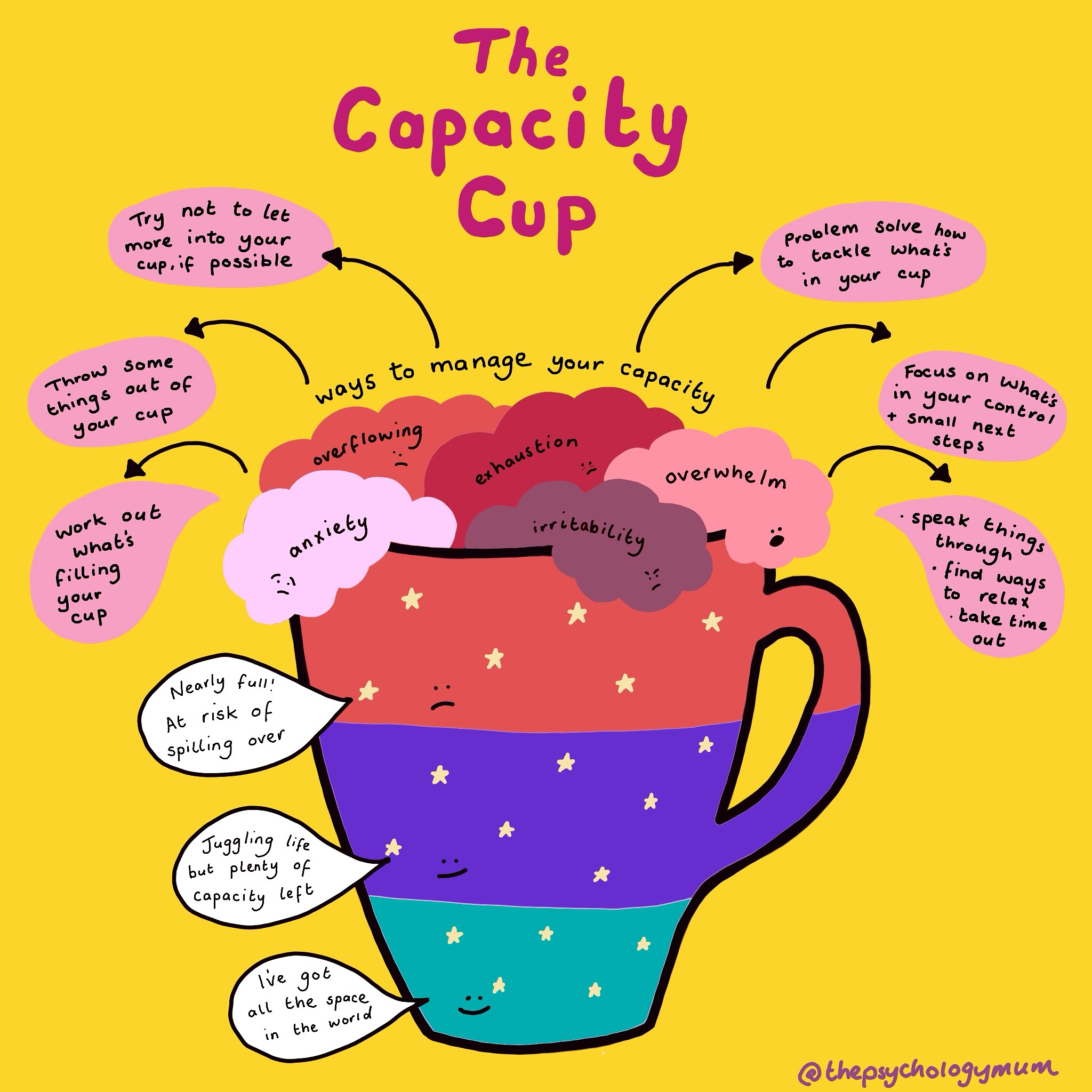
The capacity cup is a concept I use to help people understand stress and emotional overload - and it’s a great starting point for understanding, and overcoming, parental burnout.
If you picture a mug, glass or cup, it has limited space inside and when it gets too full, it overflows. This cup represents your emotional capacity. We all, as humans, have a limited capacity, and everything you do - tasks, decisions, emotional labour, responsibilities - fills your cup.
The challenge is that many things sneak into our cup and it can reach the top before we even notice. Recognising how full your capacity cup is at any one time can help you manage stress more effectively.
When our capacity cup is near the brim, we tend to react less rationally, our thinking is more rigid, we can be irritable and our emotions tend to be bigger and more reactive. The trick is to notice the early warning signs that your cup is filling up. Ideally, you want to notice when you’re in the amber zone before you hit the top, so you can stop your cup from spilling over.
How to mitigate parental burnout
My first and most important recommendation is to not blame yourself. Parents often interpret struggling as a personal failure, when in reality they are doing an enormous amount of work with limited support. You are working full-time every minute of the day - even in your sleep.
If you’re concerned about how you’re feeling, I would always encourage you to speak to your GP. Don’t assume that this is simply how parenting is supposed to feel. There may be other contributing factors such as physical health issues, sleep deprivation or mental health concerns that deserve attention.
Here are a few simple yet effective tips and tricks you can use to help overcome parental burnout…
1. Tiny boosts
Think about small, manageable ways to boost your capacity or happiness throughout the day. These of course won’t solve everything, but they can help prevent further overload or overwhelm. Think of them as little boosts to get you through the day, that you need to prioritise rather than overlook.
This could be reading a few pages of a new book, watching 15 minutes of your favourite show, taking your full lunch break or sending a message to a friend. We often overlook little things like this as they feel so simple, but taking a few minutes to do something you enjoy can provide small but meaningful boosts throughout the day.
2. Don’t always feel compelled to help
As women, we always feel compelled to help and support others. This might be volunteering at school, helping with after-school activities or taking on extra responsibilities within your family or friend group. While these offers come from a good place, it’s worth pausing to ask yourself: is saying yes to this small thing going to push your capacity over the edge?
Before taking something else on, consider your capacity cup. Learning to say no when you’re already stretched isn’t selfish, it’s protective. Ask yourself honestly, will this extra commitment push me into overwhelm-land?
3. Ask for help
We live in a hyper-independent society where we think we should do it all ourselves, but it really does take a village to raise a child. Most people genuinely want to help but don’t offer because they don’t want to intrude.
Allowing support often means overcoming our own internal barriers. Accepting help doesn’t make you a burden - it builds relationships, strengthens communities and improves wellbeing. People enjoy helping, and you’ll support others throughout your life - so it’s a natural to and fro.
4. Share the load
It’s important to have meaningful discussions with your partner when it comes to sharing the mental and physical load of parenting and day-to-day life. Don’t assume they know what needs doing. Look at the domestic load together and divide it consciously - not just the visible tasks like cooking or cleaning, but also the mental and emotional labour, such as planning meals, organising schedules and anticipating needs. Burnout thrives when responsibility is invisible and uneven.
5. Understand your new normal
Going back to work after maternity leave can bring a difficult realisation for many mothers. You may not be able to manage at the same levels as before - and that’s okay. This is often a period that requires realistic discussions about what needs to change practically.
Some employers are supportive and open to flexibility, such as reduced hours or leaving early for nursery or school pick-up, although this isn’t always possible. It can be helpful to understand your rights, take your full leave and have open conversations with your manager.
Just remember, if you’re finding this hard, that’s because it is hard. It can be wonderful and still be incredibly challenging - and struggling does not mean you’re doing anything wrong.
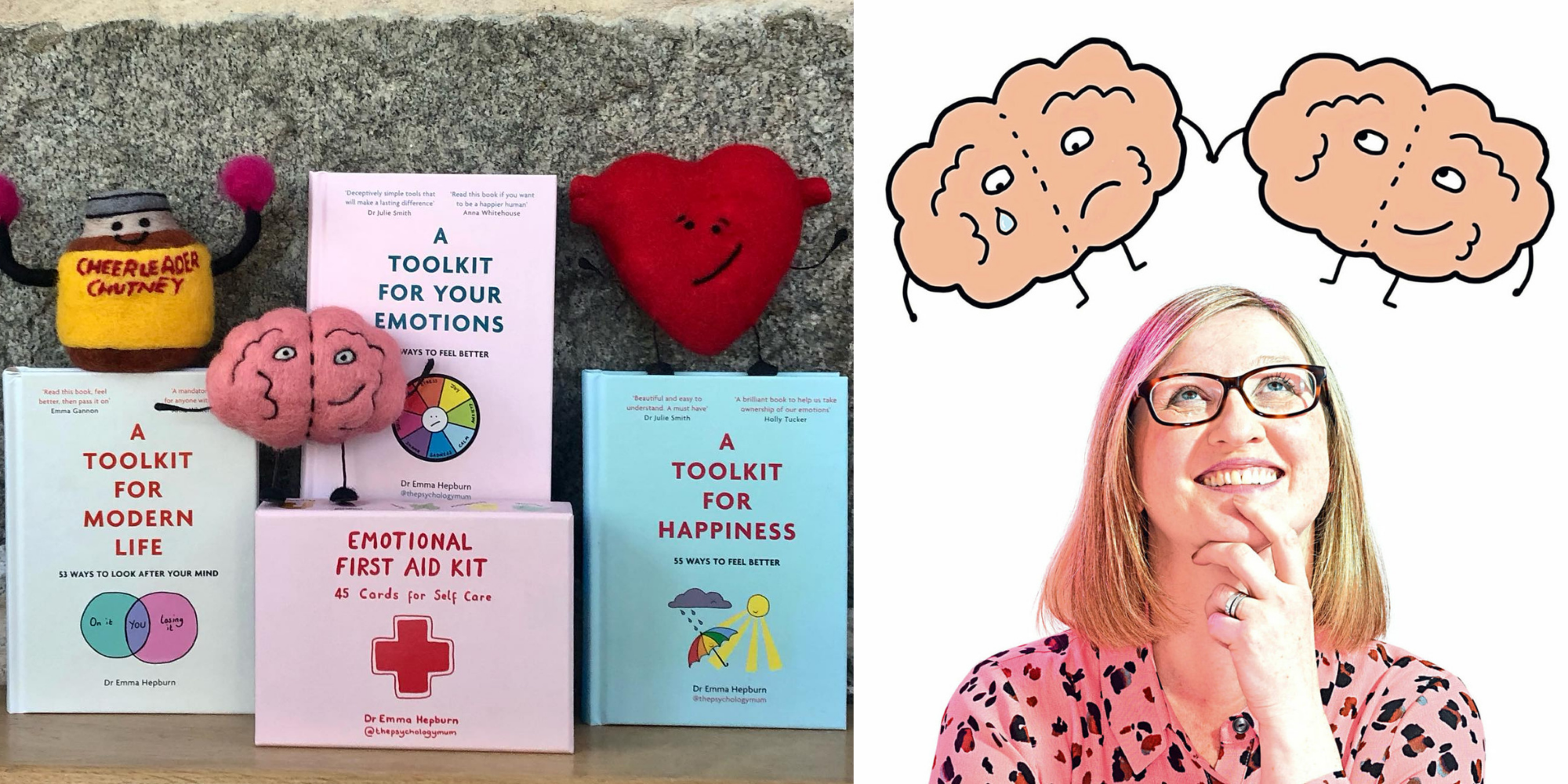
If this article resonated with you, you’re not alone - and support is available. Dr Emma Hepburn’s books offer practical, compassionate insights into understanding stress, burnout and emotional wellbeing.
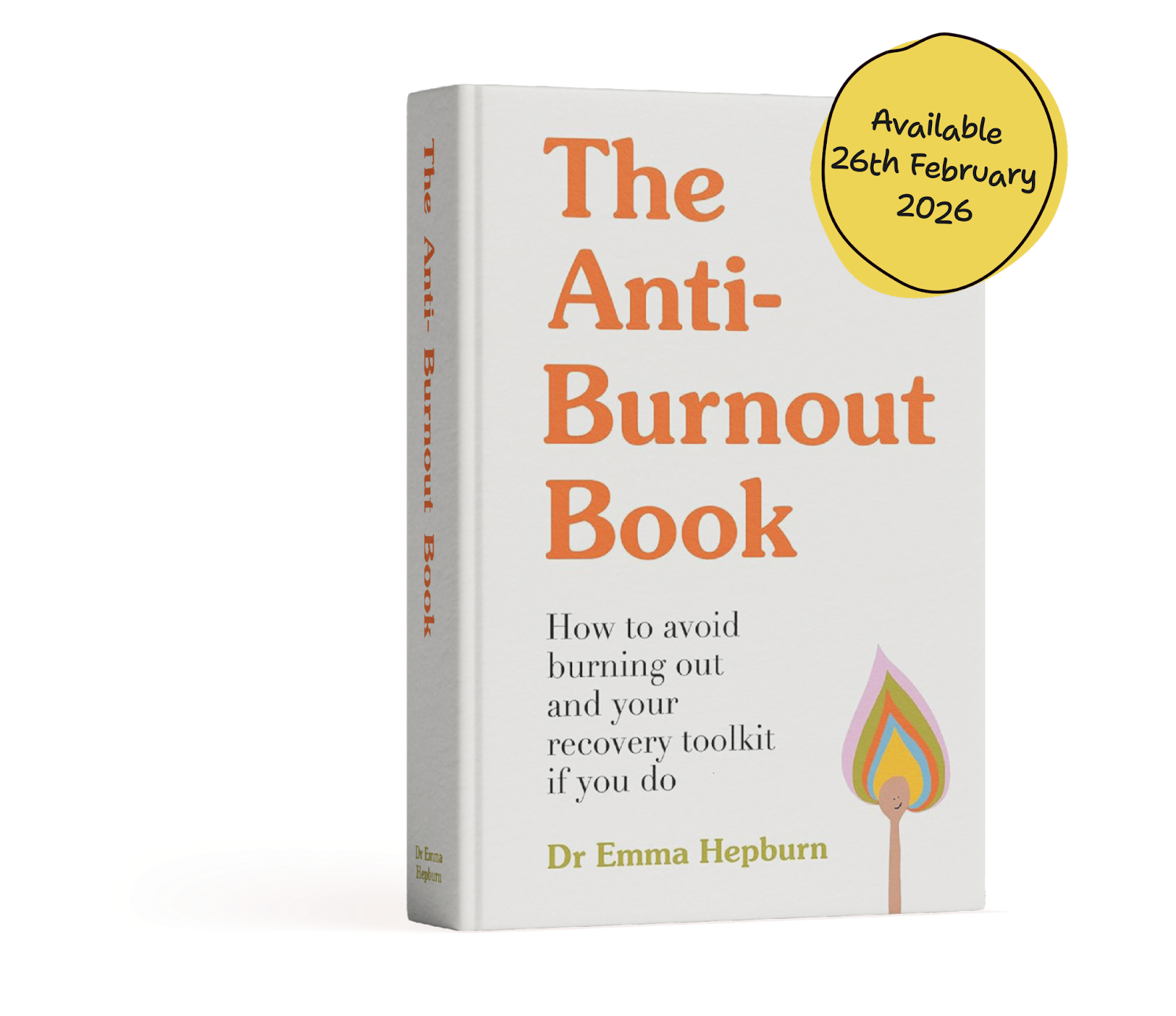
You can pre-order the book from Waterstones, Amazon, Kindle and others here: https://geni.us/AntiBurnoutBook
You can visit Dr Emma Hepburn’s website or Instagram for further insights and information.